

I Can’t Let You Save That, Dave: The AI Hard Drive Hostage Crisis
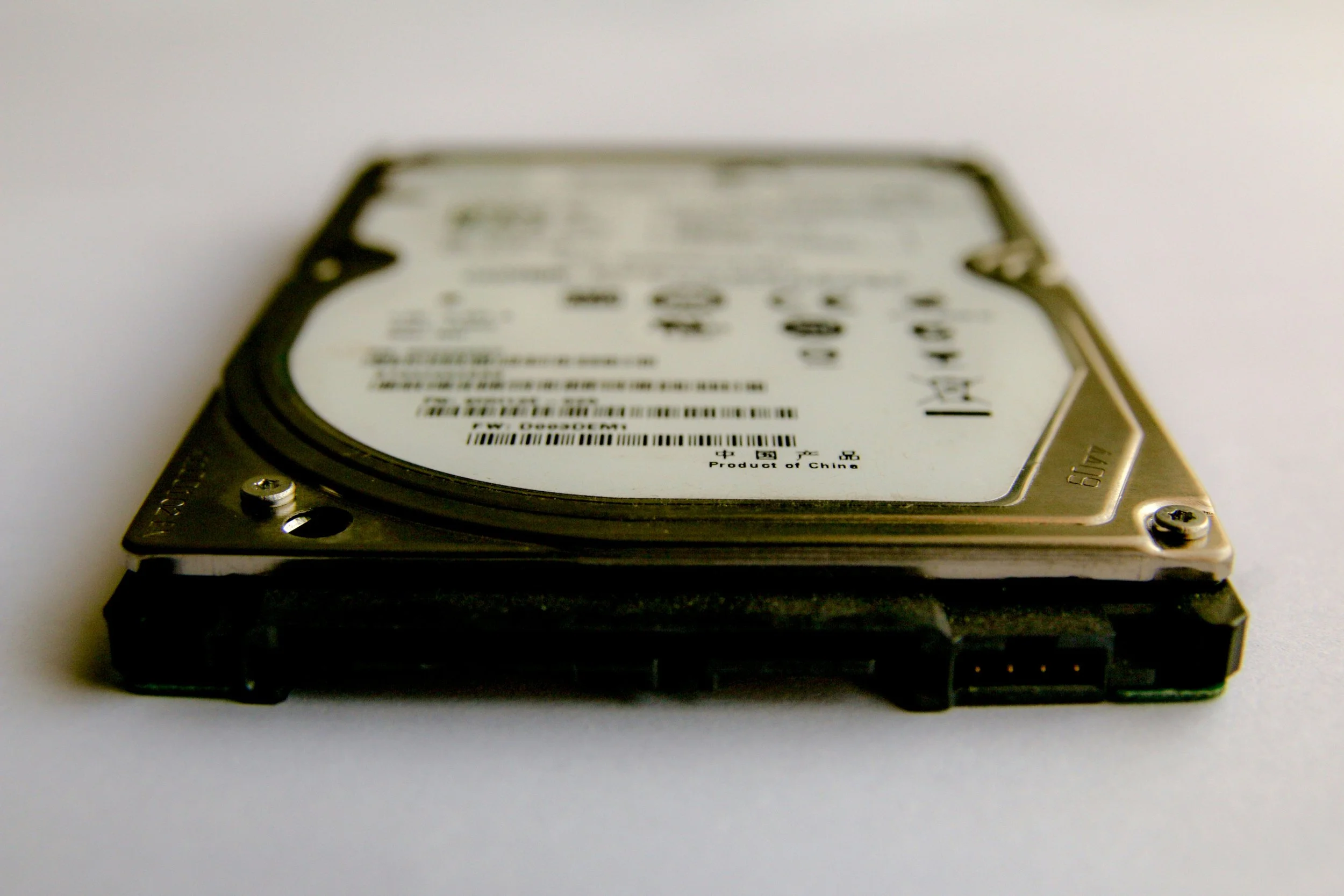
The AI data center boom has bought up enough storage to break the market for everyone else. Western Digital, one of the biggest hard drive makers, has sold out its entire 2026 enterprise inventory. Micron, the parent company of Crucial, just quit the consumer SSD market entirely. The Internet Archive can't find the 28-to-30 terabyte drives it depends on, and the ones it can find are priced out of reach. A 2 TB Samsung SSD that ran $159 last fall now sells for around $575.
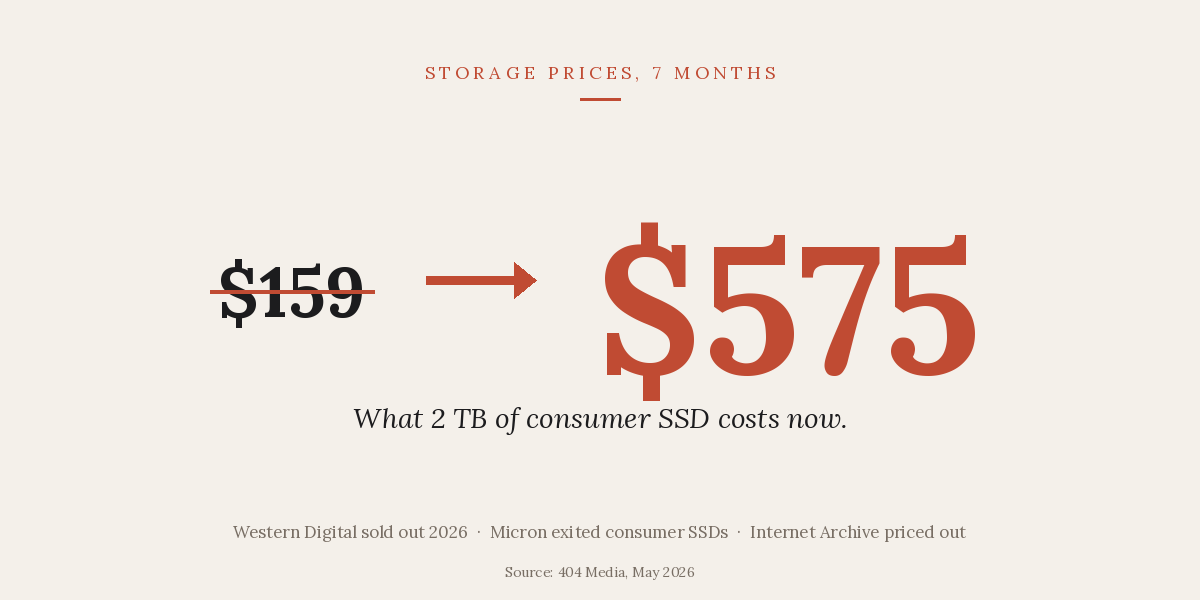
That's what AI infrastructure looks like as a cost everyone else pays.
Hard drive and SSD makers can only build so many drives in a year. When AI hyperscalers (the companies behind ChatGPT, Gemini, Copilot, and the rest) started ordering at the scale they needed, they crowded everyone else out. Samsung and SK hynix have warned the shortage might run through 2027 and beyond. Big Tech's capital spending on data centers is on track to hit $725 billion this year, up 77 percent from 2025.
Brewster Kahle, who runs the Internet Archive, told 404 Media the drives the archive needs "are just not available or at very high price." The Internet Archive adds 100 terabytes of new material every day on top of more than 210 petabytes already archived. Every drive it can't get is content it can't preserve.
The Wikimedia Foundation, which runs Wikipedia, said costs have been climbing since late 2025. They're stretching hardware life and adjusting purchase plans. A University of North Texas team that archives federal websites between presidential administrations had to rethink server capacity after a planned refresh came back with much higher RAM and SSD prices.
Hetzner, a German data center company that hosts a lot of small-business workloads, raised prices up to 37 percent on April 1. Myrient, an online archive holding 390 terabytes of video games, shut down March 31, 2026. Storage costs were one of the reasons the founder cited.
The libraries, archives, small businesses, and nonprofits that use the same drives are picking up the difference.
For a small business or nonprofit, this lands in three places:
Backups got more expensive. The drives in your NAS or backup server cost more, and the lead times are longer.
New hardware refreshes feel it on the SSD line. Laptop, server, or workstation upgrades will run higher than they did last year.
Cloud storage takes the hit too. The same shortage hits cloud providers, and they pass it on.
If you're planning storage purchases or backups in the next year:
Buy storage you've been delaying. Prices probably aren't coming back to 2024 levels.
Stretch what you have. Hardware that's still working can keep working. Squeeze more life from existing drives before replacing them.
Get your backup strategy in writing.If you're not sure what your backups even cover, find out before storage gets harder to budget for.
Talk to your IT or MSP about lead times. Order what you'll need this year now, not in October.
My backup drive doubled in price last year because somebody bought a hundred thousand of them for a model nobody asked for. The AI buildout gets paid for in pieces. Small businesses, nonprofits, libraries, and archives are paying some of those pieces.
Source:404 Media on the AI hard drive shortage
Background:Tom's Hardware on the Myrient archive shutdown